
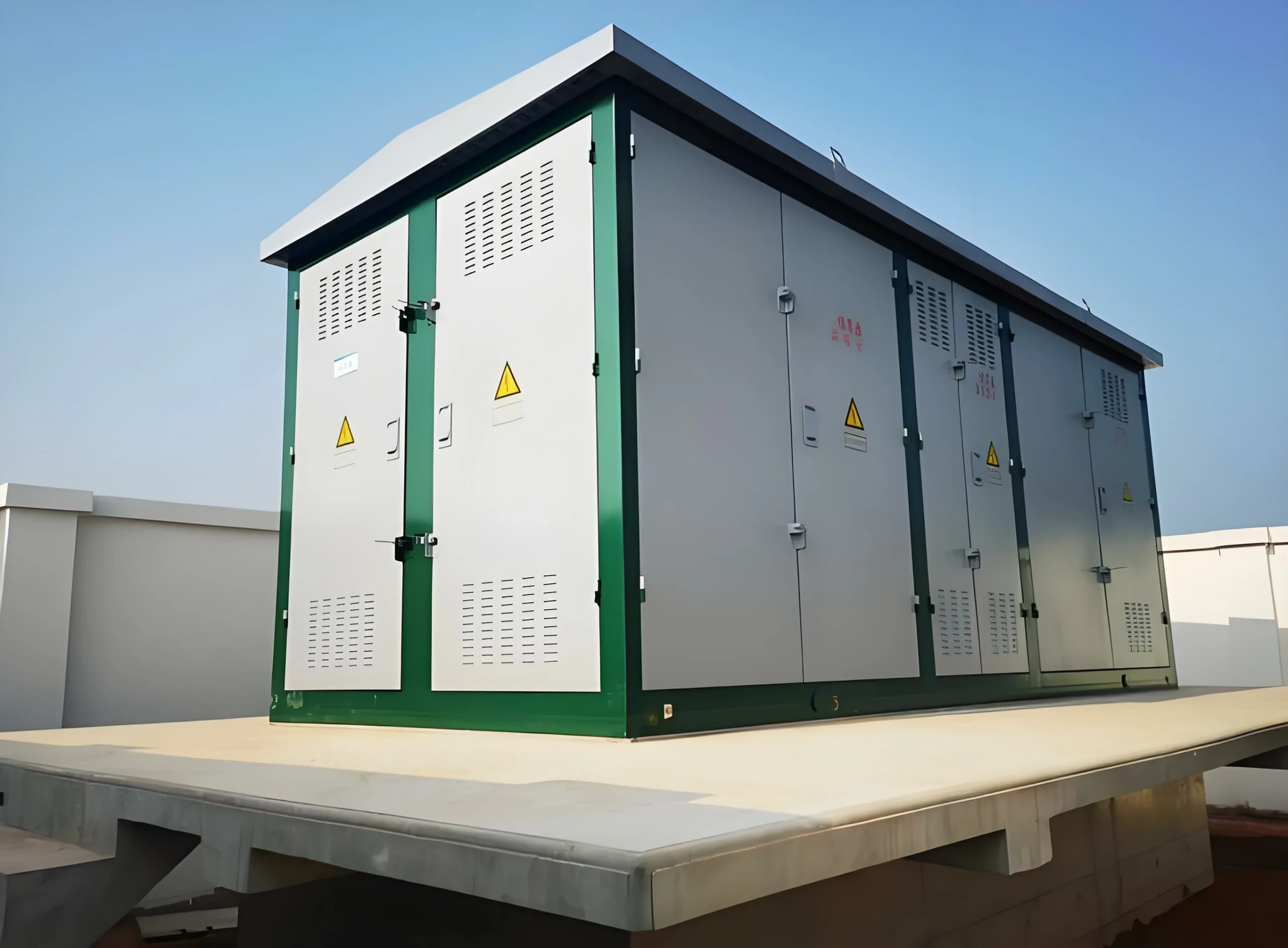
Urban infrastructure development faces a persistent engineering challenge: delivering reliable, high-capacity power within severely constrained footprints. As metropolitan centers densify, traditional substations become increasingly impractical due to land scarcity, stringent municipal zoning regulations, and extended construction timelines. For electrical contractors, municipal planners, and commercial developers, the optimal solution lies in modular, factory-tested power distribution architectures. A Compact Prefabricated Substation directly addresses these spatial limitations without compromising grid reliability, personnel safety, or compliance with IEC 62271 standards.
Why Space Optimization Dictates Modern Grid Design
Land acquisition costs in prime urban corridors continue to escalate, making every square meter critical for project profitability. Conventional brick-and-mortar substations require extensive civil engineering, prolonged on-site assembly, and complex environmental impact assessments. These variables frequently delay project handovers and inflate capital expenditures by twenty to thirty percent. Modern urban planners now prioritize infrastructure that integrates seamlessly into tight layouts, underground parking structures, or multi-use building basements. By shifting from site-built construction to precision-manufactured modules, development teams eliminate weather-related delays and reduce on-site civil work by nearly sixty percent.
Core Engineering and Compliance Advantages
The operational value of a Compact Prefabricated Substation extends far beyond physical footprint reduction. Each unit arrives pre-wired, factory-commissioned, and fully aligned with regional electrical codes. High-voltage switchgear, dry-type transformers, and low-voltage distribution panels are integrated within a climate-controlled, IP54-rated enclosure. This plug-and-play architecture accelerates commissioning from several months to under four weeks. Furthermore, modular scalability allows facility operators to incrementally add capacity as tenant demand grows, avoiding costly overbuilding during initial construction phases. Advanced thermal dissipation systems and arc-flash mitigation protocols ensure maximum safety in confined installations.
Strategic Deployment Across High-Density Sectors
Municipal transit authorities deploy these systems adjacent to subway terminals and bus depots to power critical signaling infrastructure without disrupting traffic corridors. Commercial developers integrate them into high-rise podium levels, effectively freeing ground-floor space for retail leasing or pedestrian walkways. Enterprise data center operators rely on rapid-deployment configurations to meet strict uptime service level agreements while navigating limited campus expansion. Even large-scale residential complexes benefit from noise-dampened enclosures that comply with strict municipal acoustic ordinances. The engineering flexibility of a Compact Prefabricated Substation ensures seamless adaptation across diverse load profiles and regulatory environments.
Lifecycle Cost Management and Smart Integration
While upfront procurement requires thorough vendor due diligence, the total cost of ownership consistently favors factory-built solutions over traditional builds. Reduced on-site labor hours, minimized material waste, and standardized replacement components significantly lower operational expenditures across a twenty-five-year lifecycle. Modern units also support IoT-enabled remote monitoring, enabling predictive maintenance algorithms that track transformer loading, partial discharge activity, and ambient humidity. Utility engineers gain real-time telemetry for load balancing and fault isolation. When paired with a certified maintenance partner, a Compact Prefabricated Substation delivers enterprise-grade reliability with minimal administrative overhead.
Urban electrification no longer requires sacrificing premium real estate for essential power infrastructure. By adopting pre-engineered, space-optimized distribution hubs, project stakeholders can accelerate commissioning schedules, stabilize capital budgets, and future-proof their electrical networks against rising density demands.
Subscribe to our free newsletter
We provide customized power distribution equipment solutions.
Our Privacy Policy .